

Additional Notes on Holy Baptism
The Three Modes of Baptism
Episcopal Catholic theology affirms that the validity of Baptism lies in water and the Trinitarian formula, not in the quantity of water used.
All three modes are ancient, scriptural, and recognized by the Church:

Immersion
The candidate is fully submerged in water.
Symbolizes burial and resurrection with Christ (Romans 6:3–4).
Historically common in the early Church and still used in many Anglican parishes.
Pouring (Affusion)
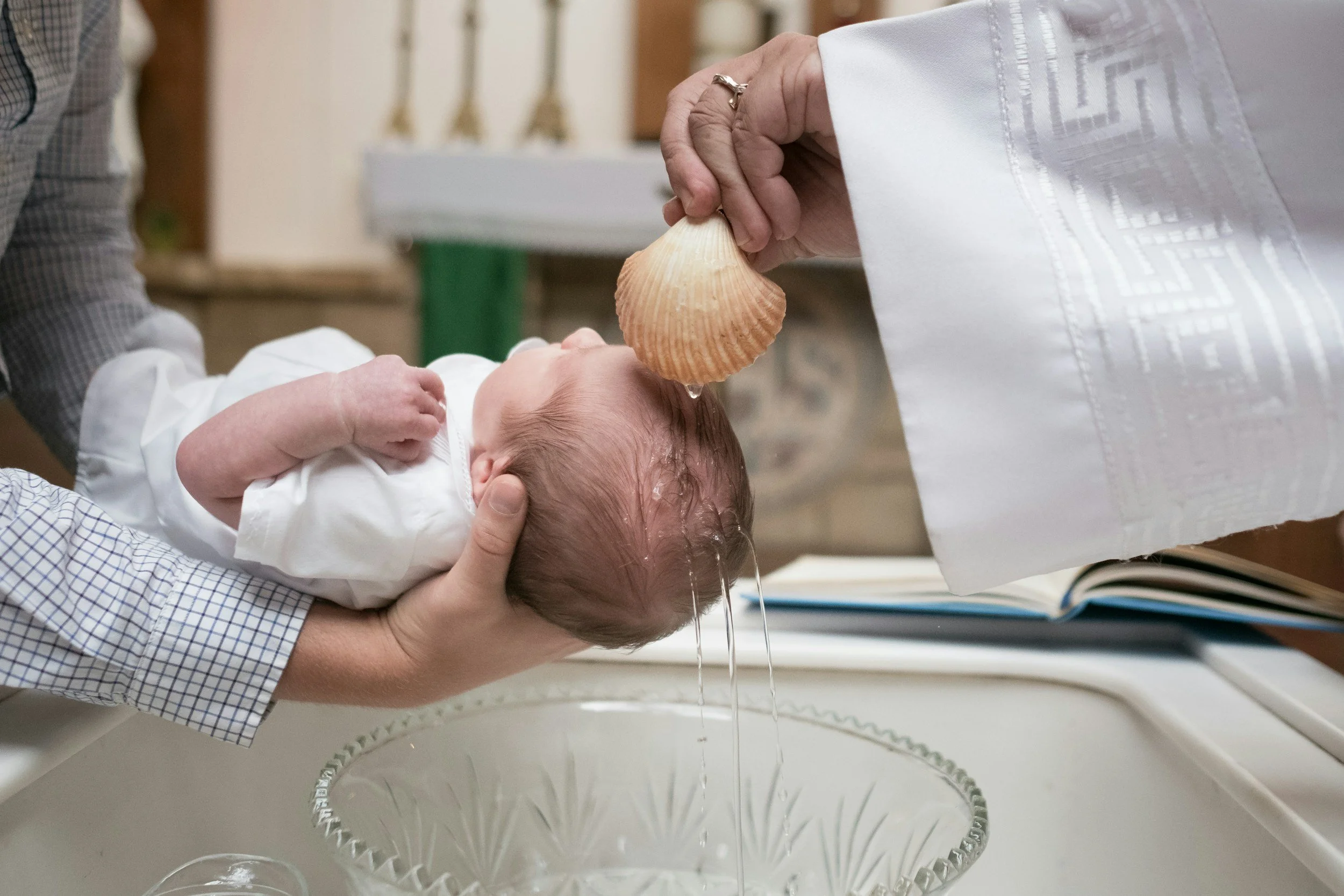
Water is poured over the head.
Reflects biblical imagery of the Spirit being “poured out” (Acts 2:17–18).
Practical and pastorally flexible, especially for infants or the infirm
Sprinkling (Aspersion)
Water is sprinkled upon the candidate.
Echoes Old Testament purification rites (Ezekiel 36:25: “I will sprinkle clean water upon you”).
Historically used when immersion or pouring is impractical.
Episcopal Catholic teaching: All three modes are equally valid because the sacrament’s grace comes from Christ’s institution, not the method. The 1928 BCP allows for any mode, with pouring being the most common in parish life.
Infant Baptism and Its Theological Reasoning
Infant Baptism is deeply rooted in Anglican tradition and is fully consistent with Scripture, the early Church, and the 1928 BCP. Here’s the theological backbone:
1. Baptism is a Covenant Sacrament
Just as circumcision brought infants into the Old Covenant (Genesis 17), Baptism brings infants into the New Covenant. Colossians 2:11–12 explicitly links circumcision and baptism as covenantal signs.
2. Grace is God’s Initiative, Not Ours
The Episcopal Catholic view emphasizes that God acts first. Infants are baptized not because they understand, but because God’s grace precedes understanding. This reflects Christ’s words:
“Suffer the little children to come unto me, and forbid them not” (Mark 10:14).
3. The Faith of the Church Stands In
In the 1928 BCP, godparents and the congregation vow to raise the child in the Faith. This mirrors the early Church’s practice where the community’s faith supports the child until Confirmation.
4. Baptism Regenerates and Incorporates
Anglo‑Catholics affirm baptismal regeneration in the classical Anglican sense:
The child is made a member of Christ
Adopted into God’s family
Cleansed from original sin
Given the seed of new life in the Spirit
This is why the 1928 BCP boldly prays:
“Seeing now, dearly beloved brethren, that this child is regenerate…”
5. The Child Grows Into What God Has Given
Baptism plants the seed of grace; Confirmation and lifelong discipleship nurture it. Infant Baptism is not the end but the beginning of Christian formation.